A / 01
DRAWN
The typed brief
One carbon for the client, one for the file. A correction meant retyping the page, so the thinking was finished before the keys were touched.
PRESS EST. 1972THE ARCHIVEVOL. I
THE PRAYAG LEGACY
FOLIO 01
1972
The year the press started running. It has not stopped.
Prayag Media did not begin as a digital agency. It began as Prayag Printing Press — metal type, ink matched by eye, and sheets fed one at a time against a deadline that could not be moved.
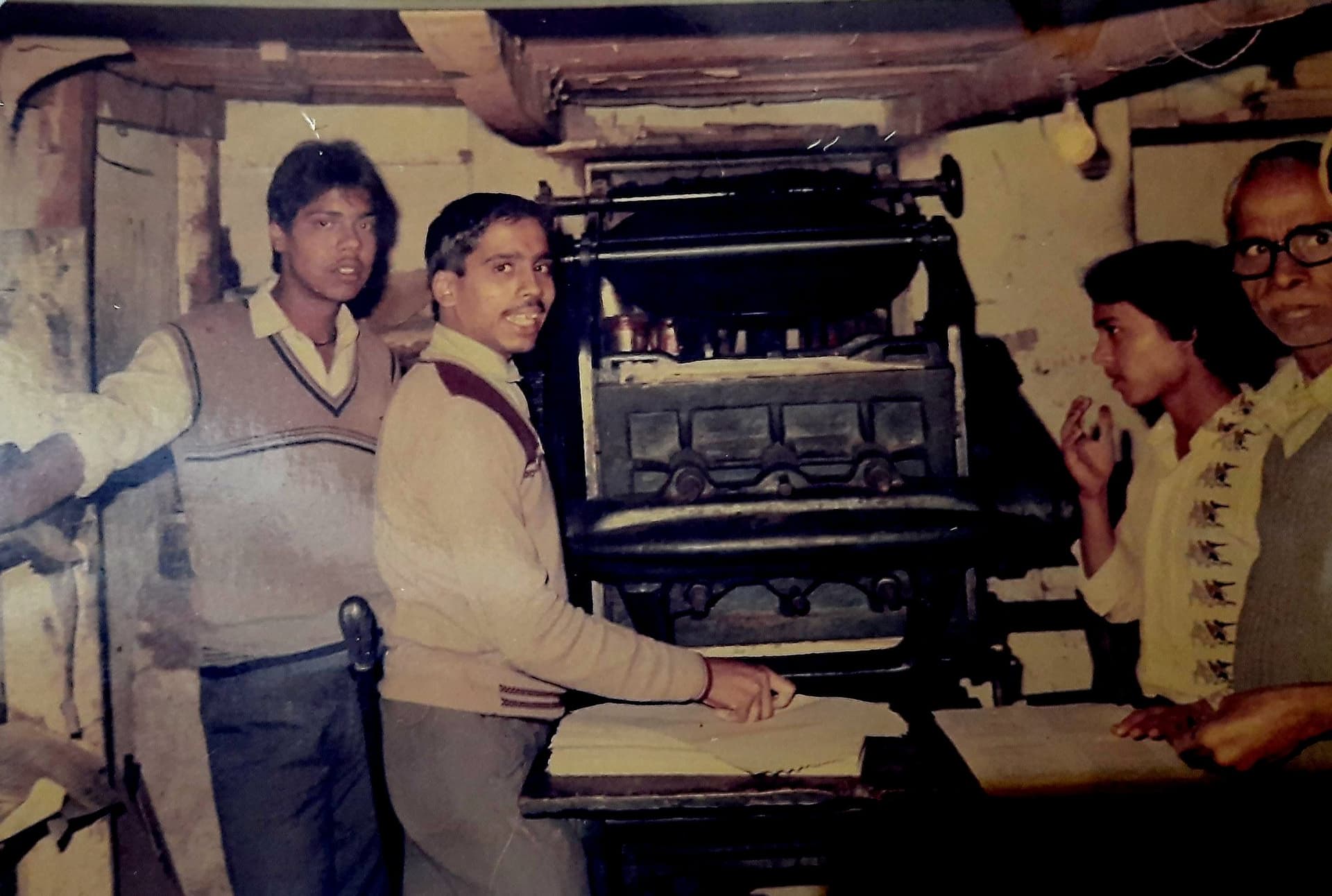
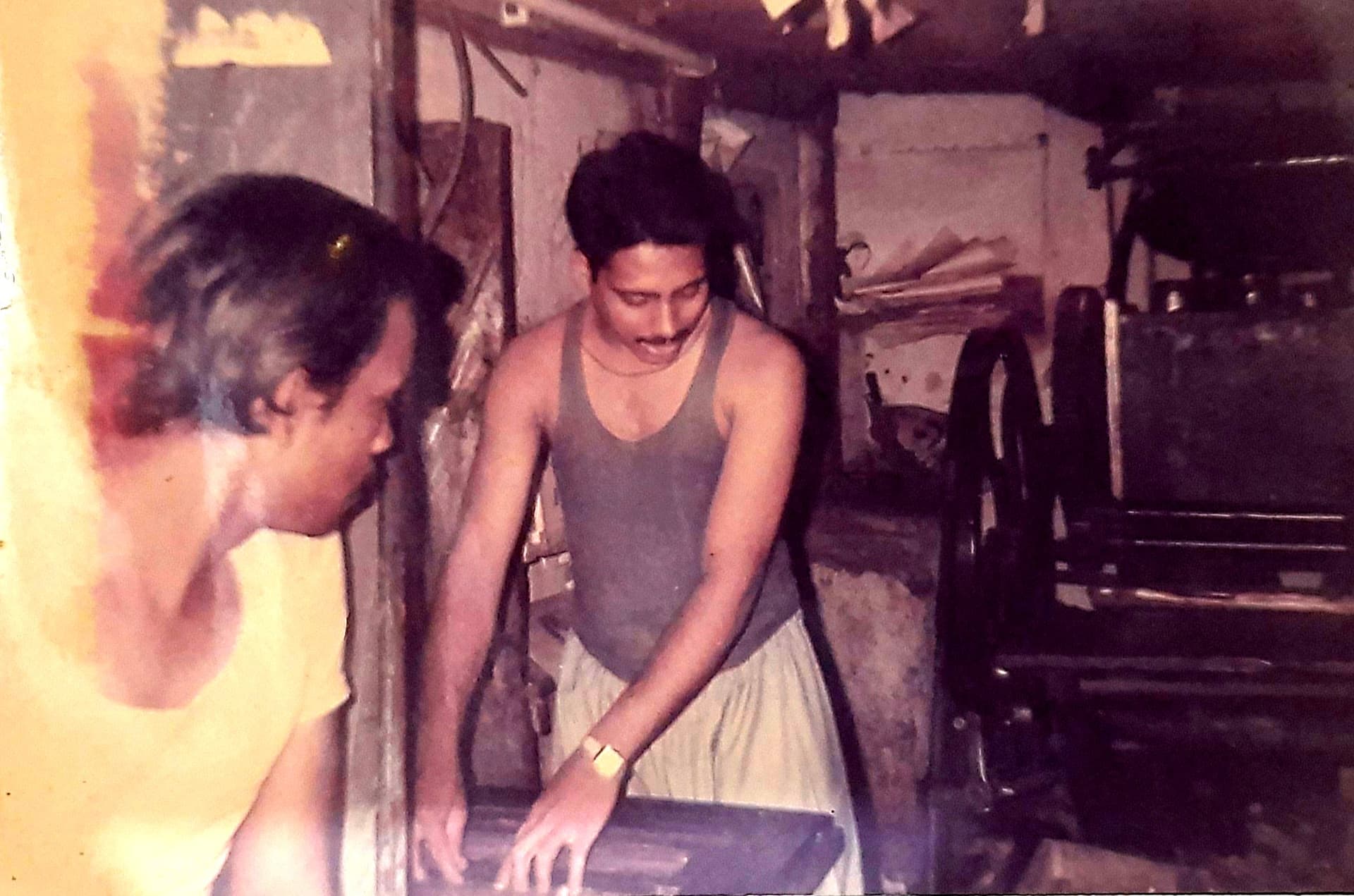
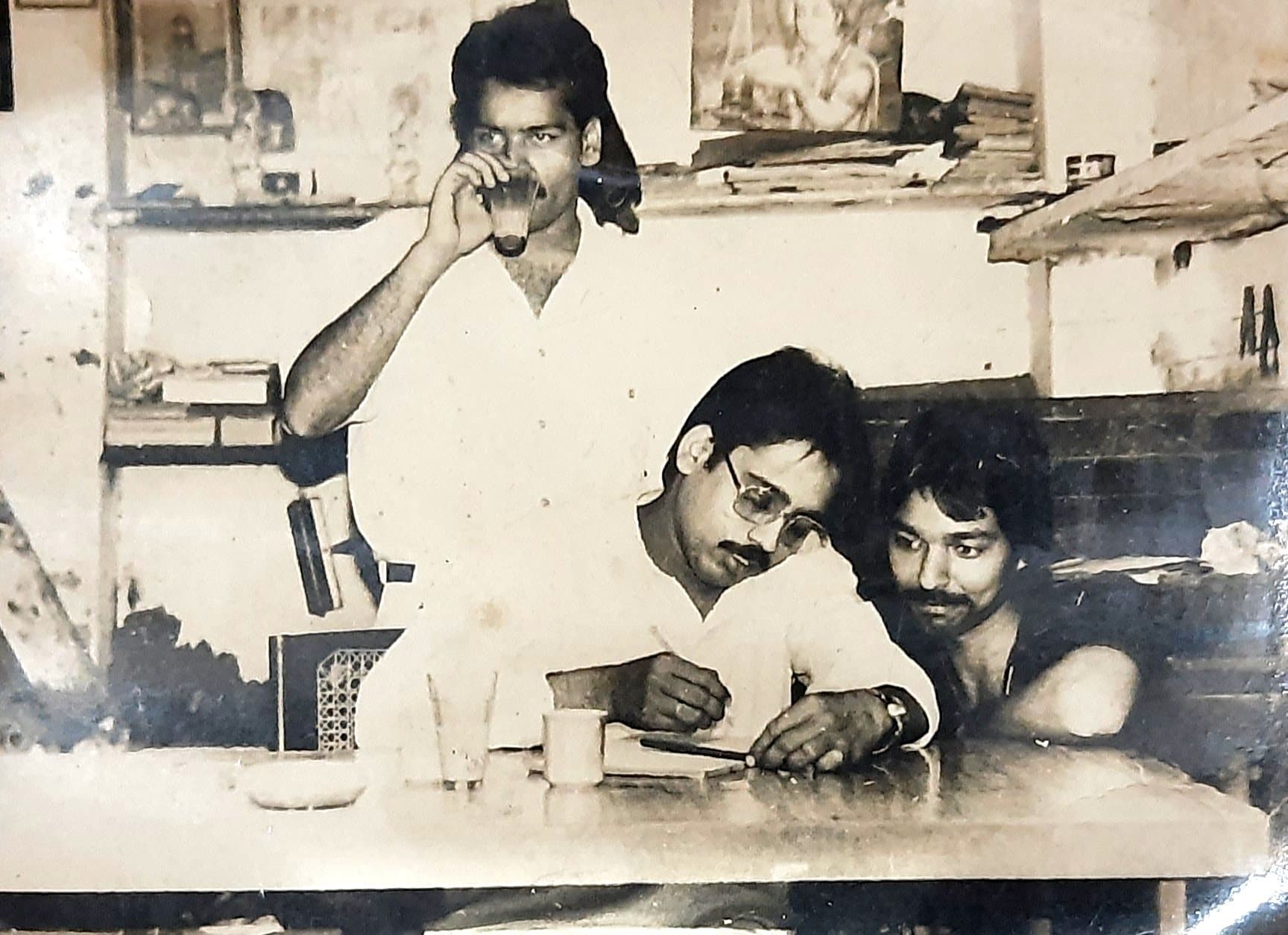
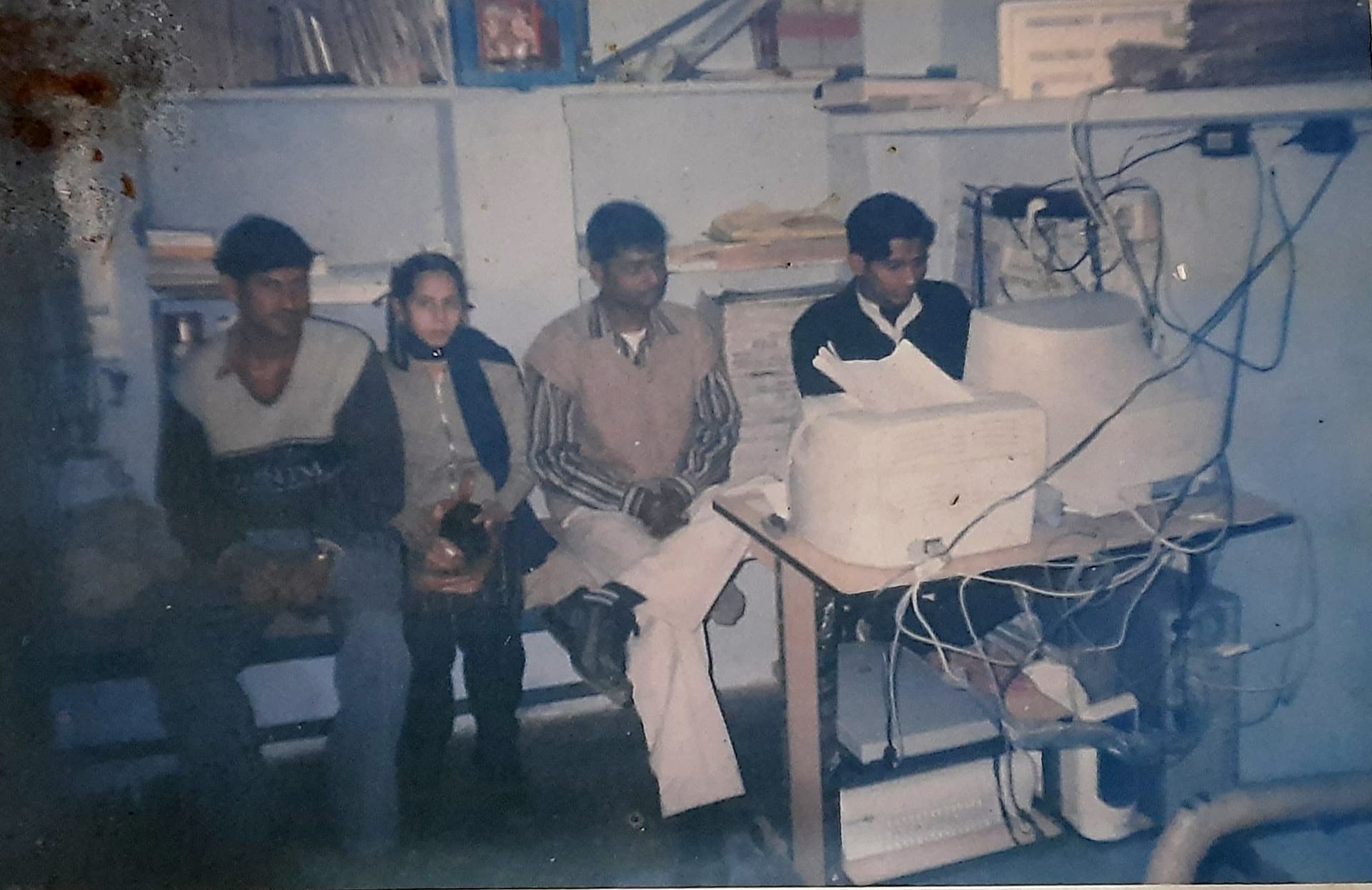
CONTACT STRIP · FOUR FRAMES FROM THE PRESS ARCHIVE
Set for the archive in four faces. Composed digitally, in the manner of a print annual of the period.
TURN THE PAGE ↓
The platen, the morning’s stock stacked on its bed, and the people who ran it. Every sheet that left this room had been checked by hand, because nothing could be changed once it was printed.
Scanned from the family’s own prints. Three more frames from the same archive sit beside the chapters below.
Before a layout could be undone, it had to be right the first time. That is the whole difference — and it is the part of the trade this studio kept.
A / 01
DRAWN
One carbon for the client, one for the file. A correction meant retyping the page, so the thinking was finished before the keys were touched.
A / 02
DRAWN
Ruled in a blue the camera could not see. Columns, margins and the fold were decided in pencil long before anything was set in metal.
A / 03
DRAWN
You chose a face by looking at it printed, at size. A book of specimens was the studio's most consulted object and its most worn one.
A / 04
DRAWN
A film was argued frame by frame on paper first. Six panels and a line under each — cheaper to redraw than to reshoot.
A / 05
DRAWN
The whole roll printed at thumbnail size, read with a loupe and marked in wax pencil. One frame in thirty-six was ever enlarged.
A / 06
DRAWN
Proof that the work ran. Cut from the paper the morning it appeared, dated in the margin, and filed — often the only record a campaign existed at all.
The pieces below are drawn for this page: illustrations of how commercial studios worked, not documents from the Prayag archive. The press's own photographs are the prints in the archive below.
Four changes of medium, in the order they happened. Where a date has not been confirmed by the family, the field is left stamped rather than filled.
01
FILE / 01
1972
Metal, ink and a deadline that could not move.
Prayag Printing Press has been operational since 1972. The work was physical — type set by hand, ink matched by eye, sheets fed and checked one at a time. A mistake could not be edited after the run, which set a standard the studio still works to.
02
FILE / 02
Printing became publishing.
A press that only prints takes instructions. A press that lays out a page makes judgements — what goes at the top, what gets the space, what a reader sees first. That is the same craft an agency practises: hierarchy, clarity, and knowing the audience.
03
FILE / 03
The page became a screen, and the screen answered back.
Print goes out. Digital goes out and comes back, with data attached. The discipline that governed a print run now governs a campaign: plan it, produce it properly, measure what happened, adjust before the next one.
04
FILE / 04
Today the output is a system, not a single artefact.
A brand now needs identity and creative, a website or application that works, campaigns across digital and print, film that carries it, and people to run all of it. Prayag Media holds those together in one place — the same idea the press was built on, applied to a wider set of media.
Two inks, one sheet, and no second chance to explain yourself. That constraint is why work from this period is still legible at a glance — and why we still design to it.
PLATE 01
ONESHEET.ONE IDEA.
A poster cannot scroll. Everything it has to say must survive being read from across a road, at speed, once.
TWO-COLOUR OFFSET · UNCOATED STOCK
PLATE 02
INKISFINAL.
Ten thousand impressions do not wait for a revision. Work left the studio checked, because after the run there was nothing left to check.
PROOFED TWICE · SIGNED OFF ONCE
PLATE 03
MADETO BEKEPT.
Nobody files an advertisement they have already forgotten. The measure of the work was whether it was still on the wall a year later.
HALFTONE 65 LPI · HAND-SEPARATED
Nothing in the list below was abandoned. Each one changed material and kept its job — which is the argument this whole page exists to make.
ANALOG
Metal type
Set by hand, one letter at a time, out of a case.
DIGITAL
Type systems
Set once, in code, and rendered on every screen there is.
ANALOG
The pasted layout
Cut, waxed and burnished down onto board.
DIGITAL
The design system
A grid, tokens, and components that hold the grid.
ANALOG
Film and the darkroom
Shot on a roll, developed, read on a contact sheet.
DIGITAL
Digital capture
Shot, graded and delivered the same afternoon.
ANALOG
The halftone screen
A photograph broken into dots so ink could carry it.
DIGITAL
The pixel
The same idea, at a resolution the eye stopped resolving.
ANALOG
The print run
A number decided in advance and printed once.
DIGITAL
The campaign
A number measured afterwards, and adjusted before the next one.
ANALOG
The press proof
Signed by hand before the run was allowed to start.
DIGITAL
The staging build
Reviewed, approved, and only then pushed live.
FILM · FRAME · FEED
Same craft. New surface.
Six papers, as they were left. Open one.
SELECT A DOCUMENT
D / 01 — THE DATE
PRAYAG ARCHIVE
This is the only historical fact currently on record for the press, and it is the only one stated anywhere on this site. It is filed here exactly as it was given: the press has been operational since 1972. No city, no street, no machine and no second date has been added to it.
1 OF 6